
HOA Code of Ethics: A Guide for Board Members
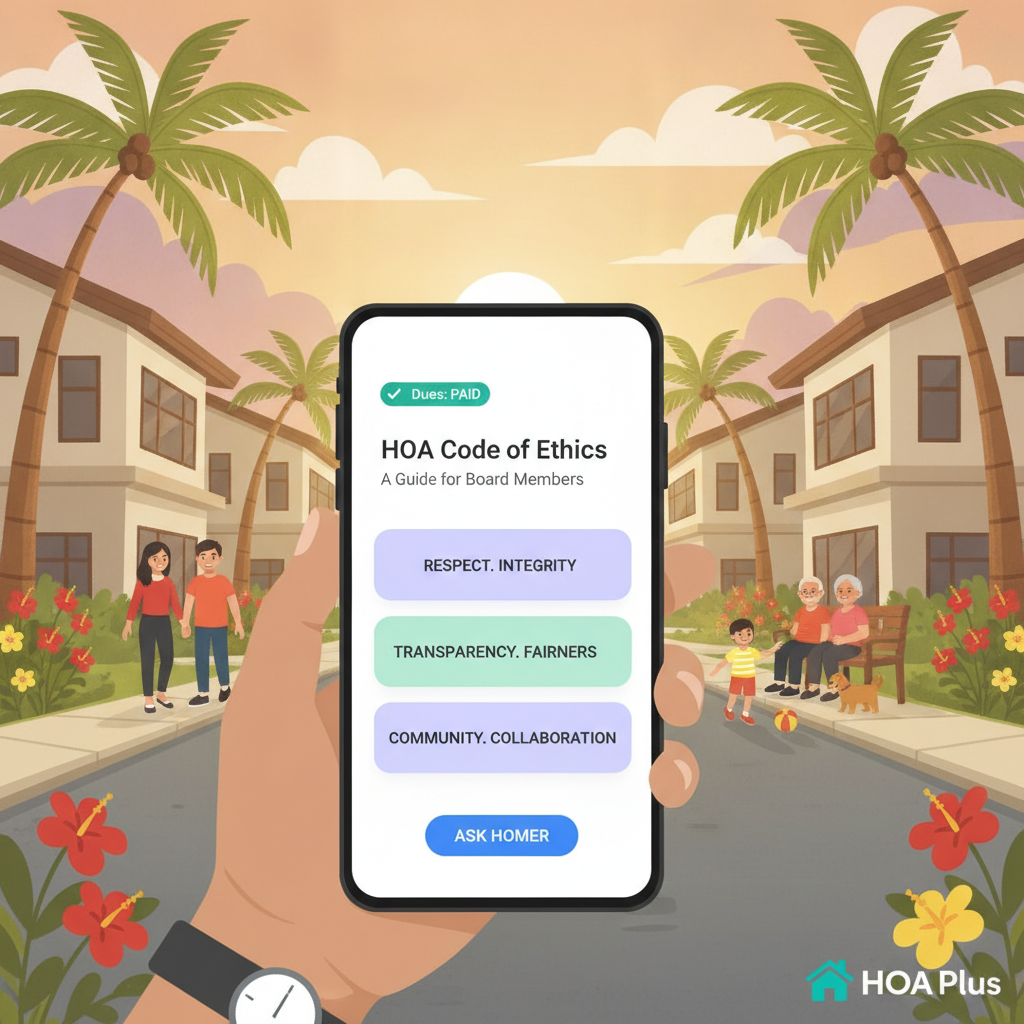
HOA Code of Ethics: A Guide for Board Members
An HOA code of ethics is the promise your board makes to every homeowner in the community. It spells out how board members must act when they handle money, make decisions, and talk to residents.
Too many subdivisions run on good intentions alone. A treasurer handles dues without clear rules. A president approves a vendor without a second opinion. Over time, small shortcuts add up, and trust quietly falls apart.
When trust breaks, the whole community suffers. Residents stop paying dues. Meetings turn into shouting matches. Meanwhile, the board burns out from constant doubt and second-guessing.
A clear HOA code of ethics fixes this before it starts. This guide shows you what the code should cover, how to write one, and how to enforce it fairly.
Why Your Board Needs an HOA Code of Ethics
Board members hold real power. They collect dues, approve spending, and enforce rules. Without a written standard, that power leans on personal judgment alone.
For example, two board members might disagree on whether a vendor’s cousin can win a contract. One sees a conflict; the other sees a fair deal. A written code removes the guesswork.
Similarly, a code protects honest board members. When a resident accuses the board of playing favorites, the code gives you a clear line to point to. Consequently, disputes settle faster and with less heat.
In short, a written HOA code of ethics turns good intentions into clear, public rules. It protects both the residents and the people who volunteer to lead them.
Without a code, every gray area becomes a new argument. A board member spends dues on a small expense, and half the street demands to know why. A written standard answers those questions before they turn into accusations.
What an HOA Code of Ethics Covers
Most codes share the same core values. They differ in wording, but the promises stay the same. Understanding these values helps you build a code that fits your community.
First, honesty. Board members must tell the truth about finances, decisions, and mistakes. Therefore, they should never hide a budget problem or exaggerate a project’s progress.
Second, fairness. The rules must apply to everyone equally, including the board’s own families. For instance, a board member’s relative should face the same late fee as any other resident.
Third, transparency. Homeowners should see where their dues go. Furthermore, major decisions should happen in the open, not in private messages. Read our guide to HOA board member duties to see how these values fit your daily work.
Core Rules Every HOA Code of Ethics Should Include
A strong code does not need to be long. It needs to be clear. These rules show up in almost every effective HOA code of ethics.
- No self-dealing. Board members should never use their position for personal gain.
- Confidentiality. Keep private resident matters private.
- Respect. Treat every homeowner with patience, even during disagreements.
- Follow the bylaws. The code cannot override the rules your community already agreed to.
- Disclose conflicts. Announce any personal stake in a decision before the vote.
Each rule protects a different kind of trust. The self-dealing rule guards your money. The confidentiality rule guards your privacy. Together, they show residents that the board serves the community, not itself.
Specifically, the conflict rule deserves extra care. When a board member’s family owns a business up for a contract, they must step back from the decision. Read our guide to HOA conflict of interest for a deeper look at this one.
How to Write an HOA Code of Ethics for Your Community
You do not need a lawyer to draft a first version. Start with a small committee of board members and residents. Together, they list the values the community already believes in.
Keep the language simple and specific. Instead of writing “act with integrity,” say what that means: “board members will not accept gifts from vendors.” Consequently, everyone understands the rule the same way.
Next, run the draft past the homeowners. Present it at a general meeting and invite feedback. In addition, let residents suggest rules the board may have missed.
Invite a mix of voices, not just the loudest ones. Seniors, renters, and new homeowners often see gaps that longtime board members miss. Their input makes the code fairer for everyone.
Ultimately, the community should vote to adopt the code. When homeowners approve it themselves, they feel ownership over the rules. As a result, they uphold it more willingly.
How to Enforce the Code Fairly
A code of ethics means little if no one follows it. Enforcement should stay consistent, calm, and free of personal grudges.
For instance, treat a first-time slip as a learning moment. A quiet conversation often fixes the problem faster than a public shaming. Therefore, address small issues early and in private.
Consistency matters more than severity. If one late payer gets a warning while another gets a fine, the code loses all meaning. Therefore, treat similar cases in similar ways, every single time.
However, serious violations call for serious steps. A board member who steals or repeatedly abuses power should face removal. Nevertheless, even removal must follow your bylaws and the law.
Furthermore, keep a written record of every step. That record protects everyone if a dispute ever reaches a hearing. A code with a clear process builds more trust than a code with harsh words alone.
What Happens When a Board Member Breaks the Code
Every code should state the consequences up front. When the rules are clear, no one feels singled out when the board acts.
Minor breaches usually earn a warning or a short suspension from a committee. Meanwhile, repeated or serious breaches may lead to removal from the board. The exact steps should match the rules in your community’s bylaws.
Public confidence grows when the board follows its own rules. Homeowners pay dues more willingly when they see leaders held to the same standard. That goodwill pays off in every meeting and every vote.
The legal basis for all of this is the Magna Carta for Homeowners’ Associations. This Philippine law sets the framework for how HOAs should govern themselves fairly.
In the end, consequences are not about punishment. They are about protecting the community from leaders who forget why they were elected.
Start With an HOA Code of Ethics Today
You do not need to wait for a scandal to write a code. A healthy board puts one in place before problems appear. In fact, the best time to set clear rules is when everyone is still calm.
Begin with one simple step: draft a one-page code and share it at your next meeting. Then invite residents to add their voices. Before long, you will have a standard the whole community can trust.
Keep the code where everyone can see it. Post it in the clubhouse, share it in your announcements, and revisit it once a year. A rule that stays visible stays alive.
HOA Plus helps you live by the code every day. It keeps records open, votes fair, and decisions visible to everyone. When you build transparency into your tools, following the code becomes the easy path.
Try HOA Plus free for your community and put your code of ethics into practice.