
HOA Succession Planning: A Smooth Handover Guide
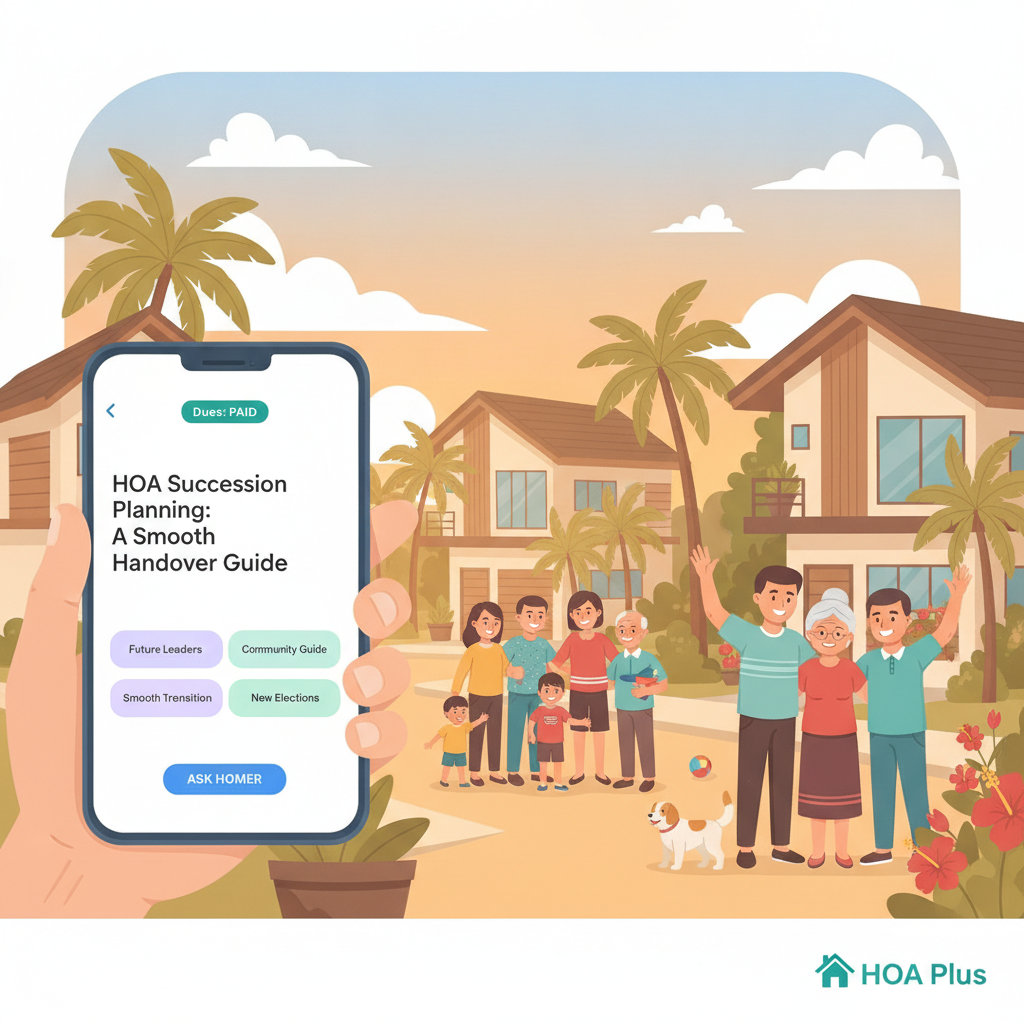
HOA Succession Planning: A Smooth Handover Guide
Every good HOA officer eventually steps down. HOA succession planning makes sure your subdivision keeps running when they do. Without a plan, one goodbye can leave the board scrambling for months.
Picture this. Your treasurer has handled the books for years. They know every account, every due date, and every vendor. One day they announce a move abroad. Suddenly nobody knows where the money goes or how to collect the dues. This is exactly the chaos that HOA succession planning prevents.
What Is HOA Succession Planning?
HOA succession planning means preparing your community before an officer leaves. You document the tasks, train a backup, and keep records in one place. Therefore, the next person can pick up the work without starting from zero.
Most boards skip this step. They assume officers will stay forever. Consequently, when someone resigns, the board rushes to fill the gap. The new officer inherits a pile of paperwork and no instructions. HOA succession planning replaces that panic with a smooth handover.
Why Your Subdivision Needs a Succession Plan
Volunteer turnover is normal. People move, change jobs, or lose interest. A strong succession plan keeps your community steady through every change.
Without a plan, three problems usually appear. First, important records disappear because only one person knows where they live. Second, payments stall because nobody can sign or process them. Third, residents lose trust when the board looks disorganized.
Succession planning also protects more than the treasurer’s seat. Every role needs a backup, from the secretary who keeps the minutes to the director who handles security. When any volunteer leaves, the community should feel a small bump, not a full stop.
Think of it like insurance. You buy it hoping you never need it. Likewise, a succession plan sits quietly until the day someone resigns. On that day, it saves your community from panic.
For example, your homeowners association may collect dues every month. If the treasurer leaves without a handover, collections can stop for weeks. In addition, unpaid bills pile up. Ultimately, the whole community pays the price.
The Cost of Skipping HOA Succession Planning
Many boards learn this lesson the hard way. They lose bank access, miss a filing deadline, or forget a vendor contract. As a result, projects stall and neighbors grow frustrated.
Furthermore, the burden falls on the remaining officers. They already work long hours as volunteers. Meanwhile, they now juggle extra duties they never trained for. Nevertheless, a little planning ahead can remove most of this stress.
A messy handover can even cost real money. When no one can find the vendor contracts, the board may sign a fresh one at a higher rate. When financial records go missing, you may pay an accountant to rebuild them. In short, skipping HOA succession planning is far more expensive than the few hours it takes to prepare.
Five Steps to Build Your HOA Succession Planning Roadmap
You do not need a complicated system. Follow these five simple steps and your board will always have a backup plan. You can also stagger officer terms so the entire board never steps down at once.
Step 1: Write Everything Down
Create a simple handover document for every role. List the monthly tasks, the key contacts, and the important deadlines. Then store these notes where the whole board can find them.
Step 2: Train a Backup for Each Role
Ask each officer to teach one neighbor their job. This person does not need to do the work today. However, they should know enough to step in during an emergency.
Step 3: Keep Records in One Shared Place
Scattered records cause most handover failures. Store bylaws, minutes, budgets, and reports in a single digital home. Similarly, keep a clear list of passwords and account numbers for the board.
Step 4: Overlap the Old and New Officers
When possible, let the outgoing officer and the incoming officer work side by side for a month. The old officer answers questions and shares tips. Consequently, the new officer learns faster and makes fewer mistakes.
Step 5: Review the Plan Every Year
Roles change and documents age. Therefore, review your succession plan at least once a year. Update the tasks, the contacts, and the backup names so nothing goes stale.
What Belongs in Your Handover Kit
A good handover kit saves your next officer hours of guesswork. Include these items and your community will thank you later.
- Bank accounts and signatories — names, account numbers, and who can sign.
- Dues and collection records — who pays, how much, and when.
- Vendor contacts — security, landscaping, water, and maintenance providers.
- Ongoing projects — status, budget, and next steps.
- Meeting minutes — past decisions and open action items.
- Bylaws and house rules — the governing documents every officer needs.
Specifically, store these in a place that survives an officer leaving. A shared digital folder works far better than a personal notebook. For instance, HOA Plus keeps all of these records in one app that every officer can open.
One more tip: keep the login details safe but shared. Use a password manager or a locked digital note so the next officer can access accounts without asking around. Never store these details only on one person’s personal phone.
How HOA Plus Makes Handovers Easy
HOA Plus gives your board a single home for everything a successor needs. Financial reports, meeting minutes, and community documents all live in one place. In turn, the next officer finds them in seconds instead of weeks.
You can even ask HOMER, the built-in helper, to answer questions from your bylaws. For example, a new treasurer can ask how late fees work and get an instant answer. As a result, the learning curve shrinks dramatically.
The announcement board also helps here. When a new officer starts, they can post a quick hello and read past notices to catch up on recent history. Meanwhile, the member directory lets them learn names and roles without guessing.
Read more about keeping your records organized in our guide to HOA document management. You can also review the duties each officer handles in HOA board member duties in the Philippines. If you want help finding your next officers, see our tips on HOA board recruitment.
Start Your HOA Succession Planning Today
Succession planning sounds like a big project, but it really takes only a few hours. Start with one role, write down the tasks, and name a backup. Then move on to the next role the following week.
The best time to start is while every seat is still full. Waiting until an officer announces their exit leaves you weeks, not months, to prepare. Even a simple one-page checklist beats an empty handoff.
Remember, every officer will leave someday. The question is whether your community is ready. HOA succession planning turns a stressful goodbye into a smooth handover.
Under RA 9904, your association carries clear duties to its members, including honest and transparent governance. You can read the full law on the Official Gazette website.
Ready to make your handovers painless? Try HOA Plus free for your community and keep every record, report, and bylaw in one secure place.