
Subdivision Parking Disputes: How to Solve Them Without Starting a War
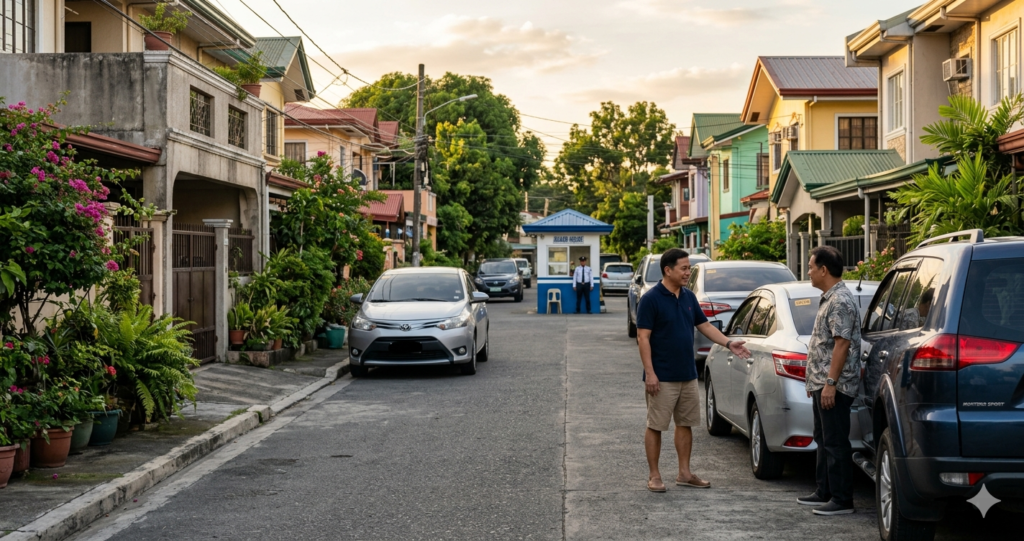
Subdivision Parking Disputes: How to Solve Them Without Starting a War
Someone parked in front of your gate again. You can’t get your car out, you’re already late for work, and nobody in the group chat is claiming the vehicle. By the time you post a photo in the GC, the thread has exploded into 200 messages — half of them arguing about who owns which parking spot, and the other half demanding that the board “do something.” Welcome to the most universal source of drama in Philippine communities: subdivision parking disputes.
Why Subdivision Parking Disputes Are the #1 Community Problem
If you live in a Philippine subdivision, you already know: parking is personal. It doesn’t matter how friendly your neighbors are — the moment someone blocks a driveway, parks in an unmarked spot someone considers “theirs,” or leaves a vehicle sitting on the street for weeks, tensions rise fast.
The root of most subdivision parking disputes is simple: there are more cars than spaces. Many subdivisions in the Philippines were designed decades ago, when one car per household was the norm. Now, families have two or three vehicles, plus visitors and service vehicles competing for the same narrow streets. Add motorcycles, tricycles, and the occasional delivery truck, and you’ve got a daily battle for space.
But it’s not just about space — it’s about unclear rules. In many communities, parking rules either don’t exist, haven’t been updated in years, or exist only in a document nobody has actually seen. When the rules are unclear, everyone makes up their own version. One homeowner thinks the space in front of their house is exclusively theirs. Another thinks overnight street parking is fine as long as it’s “just for a few days.” The guard doesn’t know what to enforce, and the board is tired of mediating arguments they don’t have clear authority on.
And then there’s the group chat. Every parking complaint turns into a public spectacle. Passive-aggressive photos, thinly veiled posts, and full-blown arguments that drag in neighbors who have nothing to do with the original problem. What started as one blocked driveway becomes a community-wide feud that takes weeks to die down — if it ever does.
What Your HOA Can Actually Do About Parking
Here’s the good news: your HOA board has the legal authority to regulate parking in your subdivision. Under RA 9904 (the Magna Carta for Homeowners), homeowners’ associations can establish rules regarding community safety, traffic, and parking within their community. This means your board can create parking guidelines, designate zones, and impose reasonable penalties for violations — as long as the rules are properly adopted and enforced with due process.
The key phrase there is “properly adopted.” A parking rule scribbled on a piece of paper by one board member doesn’t count. For parking regulations to be legitimate and enforceable, they need to be approved through the proper channels — ideally discussed at a General Assembly, included in the bylaws or house rules, and communicated clearly to all residents.
This is where most subdivisions fall short. The rules might exist somewhere, but residents don’t know about them, can’t find them, or disagree on what they actually say. That gap between “having rules” and “everyone understanding and following the rules” is where the drama lives.
Step 1: Get Your Parking Rules in Writing — and Make Them Accessible
The first step to solving parking disputes in your subdivision is making sure everyone knows what the rules are. Not a screenshot in the GC from 2019. Not a verbal reminder from the guard. The actual, official, current parking rules — accessible to every homeowner at any time.
If your community uses a platform like HOA Plus, your parking rules can live inside your bylaws and house rules, accessible through the app. And if a homeowner isn’t sure whether overnight parking is allowed or where visitors should park, they can just ask HOMER — the AI assistant that has read every page of your community’s bylaws — and get an instant, cited answer. No more “I think the rule is…” conversations. Just the actual rule, straight from the source.
Step 2: Make Reporting Easy and Anonymous
One of the biggest reasons parking violations go unreported is fear of confrontation. Nobody wants to be known as the neighbor who complained. The person blocking your driveway might be a friend’s relative. The homeowner taking up two spots might be the kind of person who retaliates. So people suffer in silence — or worse, they vent in the GC and make it everyone’s problem.
Anonymous reporting changes the game. When residents can report a parking concern privately, without their name attached, they’re more likely to report early — before the situation escalates. The report goes directly to the board or admin, not into a chaotic group chat. And because the complaint is AI-rephrased to remove emotional language, what reaches the other party is a calm, neutral notification — not an angry accusation.
This alone can prevent most parking arguments from becoming full-blown neighborhood feuds. The issue gets flagged, the admin handles it, and both parties are treated fairly.
Step 3: Let the Community Decide on Parking Policies
Parking rules feel a lot more fair when residents had a say in creating them. Instead of the board unilaterally deciding that no overnight street parking is allowed, why not put it to a vote? Should visitor parking be limited to 24 hours? Should repeat violators get fined? Should the subdivision invest in numbered parking markers?
When you use community voting polls to decide parking policies, residents are more likely to respect the rules because they helped create them. It’s a lot harder to complain about a policy when you had the chance to vote on it — and the results are transparent for everyone to see.
Step 4: Communicate Changes Through Official Channels
Once your subdivision has clear parking rules, the next challenge is making sure everyone actually knows about them. This is where the GC fails miserably. Important announcements get buried under memes, off-topic conversations, and arguments about unrelated issues. A new homeowner who joined the GC last month has no way of finding a parking rule that was posted — and argued about — six months ago.
Official announcements through a community hub solve this. Parking updates, new rules, reminders before holidays when visitor traffic increases — all of it goes through a structured channel that residents can actually find. No scrolling through 400 GC messages. No “who has the screenshot?”
Step 5: Enforce Fairly and Document Everything
Fair enforcement is what separates communities that solve parking problems from communities that just argue about them forever. The board can’t fine one homeowner for overnight parking while ignoring the same violation by a board member’s relative. Under RA 9904, sanctions must follow due process — proper notice, a chance to be heard, and consistent application of the rules.
This is where documentation becomes crucial. When every parking violation, warning, and resolution is tracked and logged, the board has a clear record that protects both them and the homeowner. If someone claims they were never warned, the record says otherwise. If someone accuses the board of favoritism, the data shows consistent enforcement. An admin audit trail isn’t just a nice-to-have — it’s the board’s best defense against accusations of unfairness.
How Fair Parking Rules Make Life Better for Residents
When parking disputes are handled properly, the benefits ripple through the entire community. You stop dreading the morning commute because the spot in front of your gate isn’t a daily gamble anymore. You stop hesitating to have visitors over because the parking situation for guests is clear. You stop avoiding the GC because it’s no longer a war zone of parking complaints.
For residents who aren’t comfortable with confrontation — and that includes a lot of us — having a structured way to report issues means you don’t have to choose between suffering in silence and starting a fight. You flag it, the system handles it, and your name stays out of it. That peace of mind is worth everything.
And for newer homeowners or renters who just moved into the subdivision, clear and accessible parking rules mean you don’t have to learn the hard way by getting a warning — or worse, getting your car clamped. You can check the rules before you park, understand what’s expected, and start off on the right foot with your neighbors.
How Fair Parking Rules Reduce the Board’s Headaches
If you’re on the board, you already know that parking complaints make up a huge chunk of the issues that land on your desk. Every blocked driveway. Every “they always park there.” Every request to tow someone’s car. It’s exhausting — especially when you’re a volunteer doing this on top of your actual job.
Clear, documented parking rules take the guesswork out of enforcement. When a homeowner comes to you with a complaint, you don’t have to make a judgment call — you check the rules, review the record, and follow the process. It’s not personal, and it’s not arbitrary. The rules apply equally, and the documentation proves it.
Anonymous reporting also means fewer face-to-face confrontations that drag the board into uncomfortable situations. Instead of mediating an argument between two angry neighbors in the admin office, you’re reviewing a calm, structured report and responding through proper channels. The emotional temperature drops, and the board can focus on solving the problem instead of managing the drama.
With proper tools, the board can also track patterns. If the same area has repeated parking complaints, maybe the solution isn’t more fines — maybe it’s better signage, designated visitor spots, or a community vote on rearranging the parking layout. Data-driven decisions beat gut feelings every time.
The Real Problem Isn’t Parking — It’s Communication
Here’s the truth that most subdivisions don’t want to hear: parking disputes are rarely about parking. They’re about communication — or the lack of it. When rules are unclear, people assume. When enforcement is inconsistent, people get resentful. When the only channel for complaints is a messy group chat, every minor issue becomes a public spectacle.
The subdivisions that handle parking well aren’t the ones with the most parking spaces. They’re the ones where the rules are clear, accessible, and fairly enforced. Where residents can report issues without fear. Where the board communicates changes through official channels instead of hoping someone scrolls past the memes in the GC to see the announcement. Where everyone had a voice in creating the policies they’re expected to follow.
That’s not a parking solution. That’s a community solution. And it starts with the right tools, the right processes, and the willingness to do things better.
Fix Subdivision Parking Disputes, Fix the Community
Parking disputes don’t have to be a way of life in your subdivision. With clear rules, fair enforcement, anonymous reporting, and real community input, you can turn one of the biggest sources of neighborhood drama into a solved problem.
Ready to bring peace to your subdivision’s parking situation? Visit hoa-plus.app and see how transparent community rules, anonymous reporting, digital voting, and a structured community hub can help your subdivision handle parking disputes — and every other source of drama — the right way.
For more on how RA 9904 gives your HOA the authority to create and enforce community rules, read our guide on RA 9904 explained for Filipino homeowners. And if your group chat is part of the problem, check out our 8 rules for a drama-free subdivision GC.