
HOA Digital Transition Philippines | HOA Plus
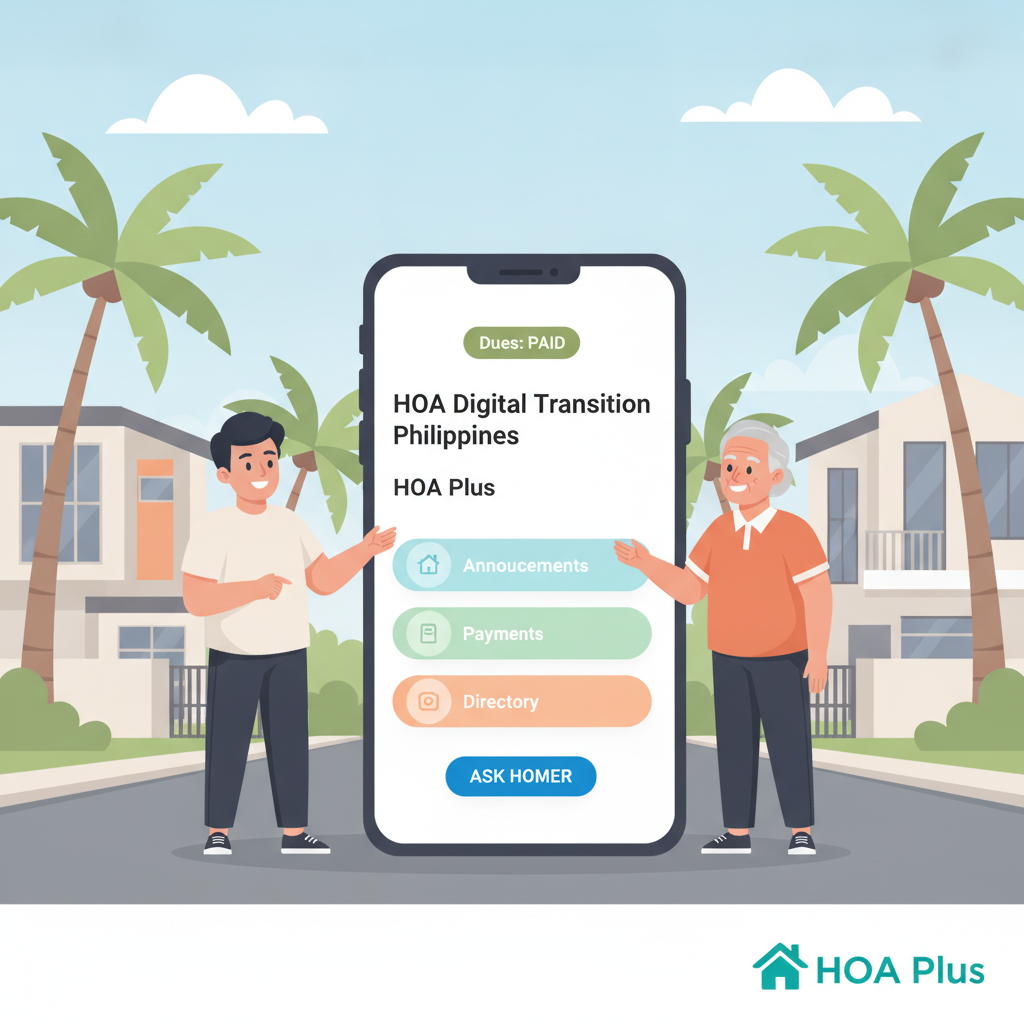
How to Transition Your HOA from Paper to Digital (Without the Headache)
An HOA digital transition Philippines homeowners can actually complete starts with a simple truth — your filing cabinet is not a forever solution. If your board still tracks dues in spiral notebooks, stores meeting minutes in dusty binders, and communicates through a patchwork of Facebook Messenger and Viber group chats, you already know the old way is wearing everyone down. The good news is that moving your homeowners association into the digital age does not require a computer science degree or a massive budget. The whole process is easier than most boards think.
Every day that your HOA runs on paper is a day something goes missing. Perhaps it is last quarter’s financial report that the treasurer cannot locate. Maybe it is the maintenance request from Block 3 that fell behind a desk. Or it could be the bylaw amendment everyone voted on six months ago — but nobody can produce the signed copy. These are not rare problems. They are the normal result of running a modern organization with outdated tools.
However, the shift from paper to digital is not just about replacing binders with PDFs. A real HOA digital transition Philippines communities succeed with means rethinking how your board works at every level. Therefore, this guide walks you through the entire process step by step. You will learn what to assess, which tools to consider, how to train your team, and how to keep things running smoothly after you make the switch.
Why Your HOA Needs an HOA Digital Transition Philippines Boards Can Trust
Paper-based systems fail in predictable ways. Records go missing. People misread handwritten notes. Important documents sit in a board member’s garage because nobody else has a copy. Furthermore, when residents ask simple questions — “How much did we spend on security last month?” or “When is the next general assembly?” — the answer should take seconds, not days of searching.
An HOA digital transition Philippines homeowners associations embrace solves these problems at their root. You cannot lose digital records under a stack of old electric bills. Digital payment tracking means you always know who has paid their dues and who has not. Digital communication tools mean announcements reach everyone at once, not just the people who happened to check the bulletin board this week.
Additionally, transparency improves dramatically. When every financial transaction lives in a system that board members and residents can access, questions about where the money goes answer themselves. Consequently, the suspicion and resentment that often poison HOA relationships fade away. Residents trust what they can see, and digital tools make everything visible.

Step 1: Assess Where Your HOA Is Today
Before you buy any software or scan a single document, take an honest look at your current situation. Specifically, list every process your HOA handles on paper. This includes dues collection, violation tracking, meeting minutes, financial reports, maintenance requests, resident directories, and official correspondence. Do not skip anything — even small items like gate pass logs count.
Next, identify the pain points. Which processes cause the most complaints? Where do errors happen most often? For example, if your treasurer spends three days every month reconciling dues payments by hand, that is a clear signal. Similarly, if residents constantly call different board members asking the same questions about facility bookings, your scheduling system needs attention.
Ultimately, this assessment gives you a roadmap. You now know exactly what needs to change and in what order. Furthermore, you can estimate how much time each digital upgrade will save. This makes it easier to convince skeptical board members — when you show them hard numbers, resistance tends to melt away.
Step 2: Choose the Right Tools for Your HOA Digital Transition
For an HOA digital transition Philippines communities embrace, the tool you pick matters more than any other decision. Here is the honest truth — if the software is hard to use, your residents will not touch it. You will spend months setting everything up only to watch people drift back to Viber and paper receipts. Therefore, ease of use must be your top priority.
Look for a platform built specifically for Philippine homeowners associations. Generic tools like Google Sheets and Facebook Groups can handle parts of the job, but they were never designed for HOA management. In addition, they create their own problems — spreadsheets get overwritten, group chats turn into argument zones, and nobody knows which version of a document is the latest.
A purpose-built HOA platform gives you everything in one place. Dues tracking, facility booking, document storage, announcements, violation reporting, and resident communication all live in a single system. Consequently, nothing falls through the cracks. For communities ready to take this step, HOA Plus offers a complete solution designed specifically for Philippine subdivisions. You can explore how it works at hoa-plus.app.
Step 3: Digitize Your HOA Records
Now comes the hands-on part of your HOA digital transition Philippines board members need to tackle with patience. Start with your most important documents — the bylaws, the articles of incorporation, the master list of homeowners, and the current year’s financial records. Scan these first and upload them to your chosen platform.
Meanwhile, organize everything into clear categories. Create folders or sections for financial records, meeting minutes, resident information, maintenance logs, and official correspondence. Use consistent naming conventions so anyone can find what they need. For example, label financial reports as “2026-07-Treasurer-Report.pdf” rather than “scan001.pdf.”
Nevertheless, do not try to digitize ten years of old records in one weekend. Start with the current year and work backward as time allows. The goal is to make today’s operations run smoothly. Old records can wait, and some may not need digitization at all.
Step 4: Train Your Board and Residents
A tool nobody knows how to use is the same as having no tool at all. Therefore, training is the most important part of any HOA digital transition Philippines associations cannot afford to skip. Schedule a dedicated session for board members first — they need to understand every feature before they can help residents.
For residents, keep it simple. Create a one-page guide with screenshots that shows the three most common tasks: checking dues status, reporting a concern, and finding important documents. Additionally, hold a short demonstration during your next general assembly. Walk everyone through the basics and let them ask questions.
Furthermore, remember that not every homeowner feels comfortable with technology. Some residents — particularly older ones — may need extra help. Pair them with a board member or a tech-savvy neighbor who can guide them one-on-one. The goal is inclusion, not speed. Every resident deserves access to information about their own community.
Step 5: Launch and Keep Improving
Set a launch date and stick to it. On that day, announce the new system to all residents through every channel you have — text messages, the old group chat, posters at the gate, and word of mouth. Make it impossible to miss. Then, stop using the old paper methods. If you keep both systems running, people will default to what they know and the digital platform will gather dust.
After launch, collect feedback actively. Ask residents what works and what confuses them. Ask board members where the new system saves time and where it still feels clunky. Use this feedback to adjust your processes and, if needed, switch to better tools. An HOA digital transition Philippines communities sustain is never truly finished — it is an ongoing commitment to doing things better.
The Benefits of an HOA Digital Transition Philippines Homeowners Will Love
When your HOA digital transition Philippines residents experience firsthand, the changes touch every part of community life. Dues payments become trackable in real time. Maintenance requests get addressed faster because they no longer depend on one person remembering to check a physical logbook. Meeting minutes are available to everyone, not just the few who attended.
Similarly, board members gain back hours of their lives. No more chasing paper trails or manually computing late fees. No more digging through cabinets for a document someone needs right now. The system handles the repetitive work so your board can focus on what matters — improving the community.
Ultimately, the biggest benefit is trust. When information flows freely and everyone can see how decisions get made, the suspicion that often surrounds HOA operations fades. Residents who understand where their dues go are more willing to pay them. Neighbors who can report concerns easily are less likely to let small issues become big fights. Digital tools do not just make HOAs more efficient — they make them more peaceful.
For a deeper look at how digital tools compare to traditional methods, read our guide on digital versus manual HOA management. You can also learn about organizing your community’s records in our post on HOA document management.
Getting Started With Your HOA Digital Transition Philippines
Your HOA digital transition Philippines community members deserve does not need to be complicated. Start small, pick the right tools, train your people, and commit to continuous improvement. The hardest step is the first one — deciding that the old way is no longer good enough. Once you make that call, everything else follows.
Ready to bring your HOA into the digital age? Visit hoa-plus.app to see how HOA Plus helps Philippine subdivisions manage dues, documents, facilities, and resident communication — all in one place. Your filing cabinet has served you well, but it is time to give it a well-earned retirement.
For more information on organizational record-keeping standards in the Philippines, visit the Department of the Interior and Local Government website.