
Fair HOA Rules Enforcement Philippines | HOA Plus
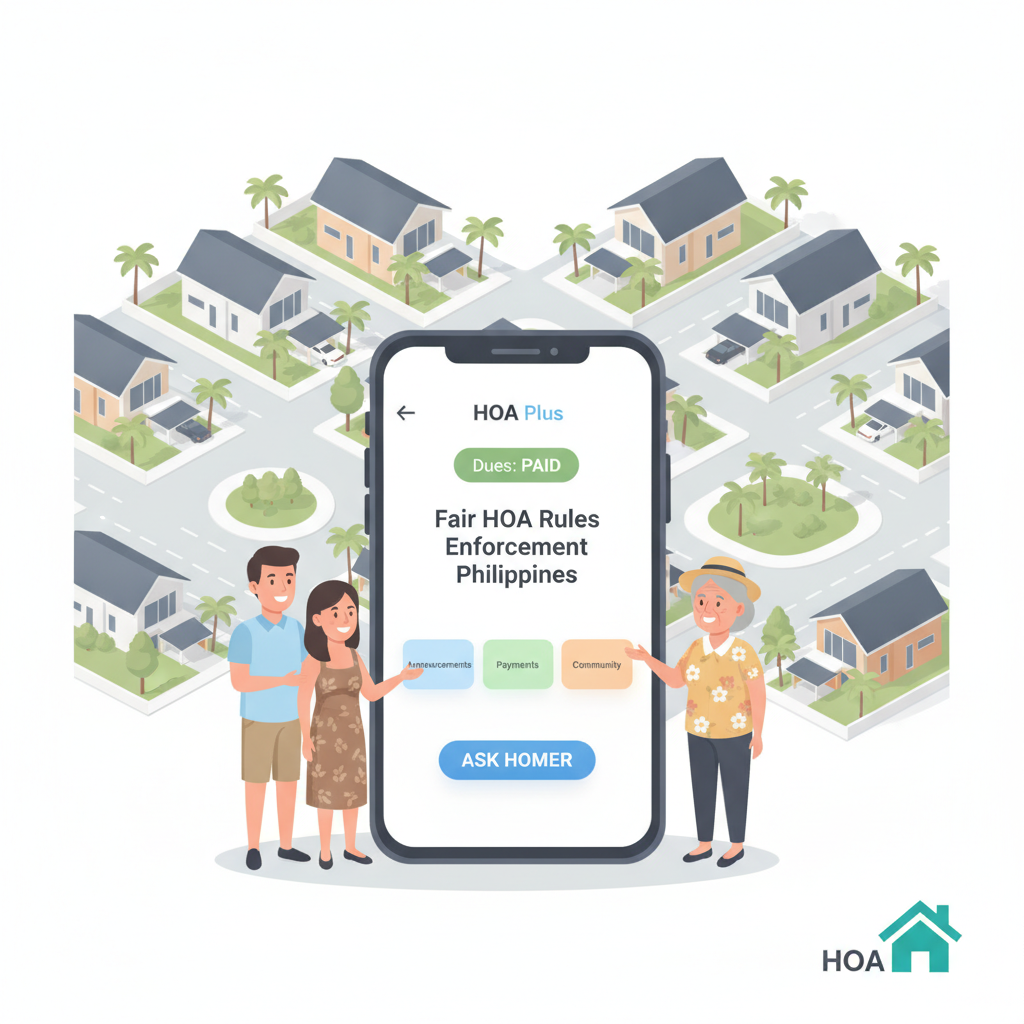
Fair HOA Rules Enforcement in the Philippines: A Guide That Works
Nothing divides a subdivision faster than HOA rules Philippines homeowners find unfair or impossible to follow. One day your board announces a new parking rule. By evening, the community group chat has exploded with angry messages. HOA rules Philippines boards create should bring order, not chaos.
Your HOA rules matter. They protect property values, keep the community safe, and set expectations for how neighbors live together. But rules that nobody follows are worse than no rules at all — they teach residents that the HOA is all talk. The key is creating HOA rules Philippines homeowners will actually respect.
Why HOA Rules in the Philippines Often Fail
Most subdivisions have a thick binder of HOA rules Philippines law requires in their governing documents. However, many of these rules sit untouched for years. Board members discover them only when a dispute breaks out. By then, tempers are already high. Good HOA rules Philippines communities need are living documents, not forgotten paperwork.
The problem is rarely the rule itself. It is the approach. Rules handed down without explanation feel arbitrary. Rules enforced inconsistently breed resentment. Furthermore, rules written in legal language confuse the very people they are meant to guide.
According to the Department of Human Settlements and Urban Development, effective community governance depends on clear, accessible policies. Residents need to understand and support the rules they live under. In other words, your HOA rules Philippines communities need more than legal authority. They need community buy-in. Without it, even the best HOA rules Philippines boards write will gather dust.
How to Create HOA Rules Philippines Residents Will Support
Writing fair HOA rules Philippines homeowners will support starts long before anyone puts pen to paper. Therefore, follow these steps to build policies your community will embrace.
Start With the Problem, Not the Penalty
Every HOA rule should solve a real problem your community faces. For example, if residents constantly park in front of fire hydrants, a parking rule makes sense. Consequently, when you explain the rule, lead with safety — not with the fine amount. Residents support rules that protect their families.
Involve the Community Early
The fastest way to kill support for new HOA rules Philippines boards propose is to surprise homeowners with them. Instead, hold a town hall or send a survey before the board votes. Ask residents what problems they see and what solutions they prefer. Specifically, when people help shape the rules, they feel ownership over them.
Write in Plain Language
Your HOA rules are not a legal contract — they are instructions for daily life. Similarly, use short sentences, common words, and clear examples. A rule that says “vehicles shall not be stationed in designated fire lanes” becomes “do not park in fire lanes — it blocks emergency vehicles.” Ultimately, simple language gets better results.
For more guidance on clear community communication, read our guide on handling HOA complaints professionally.
Enforcing HOA Rules Philippines Style: Firm but Fair
Even the best-written HOA rules Philippines boards craft mean nothing without enforcement. Nevertheless, enforcement does not have to mean conflict. A fair system protects the community while treating every homeowner with respect.
Create a Graduated Response System
Nobody likes getting hit with a fine for a first offense they did not know about. Therefore, build your enforcement in steps. Start with a friendly reminder — a simple message or note. If the issue continues, send a formal written notice. Only after repeated warnings should fines or penalties enter the picture. In addition, document every step so there is a clear record.
Apply Rules to Everyone Equally
Nothing destroys trust in HOA rules Philippines communities adopt faster than selective enforcement. If the board president’s relative gets a pass on noise complaints while others get fined, residents will notice. Consequently, the entire rule system collapses. Furthermore, board members must follow the same rules they enforce. Leading by example builds credibility for all HOA rules Philippines residents must follow.
Use Technology to Stay Organized
Tracking violations, sending reminders, and keeping records across dozens or hundreds of homes is difficult on paper. Meanwhile, digital tools can manage this automatically. For example, HOA Plus lets your board log concerns, send notices, and track resolutions all in one place. In addition, residents can see their own status and respond directly, reducing confusion and conflict.
Learn how other communities resolved common issues in our post on solving HOA disputes peacefully.
Updating Old HOA Rules in the Philippines Without a Fight
Many subdivisions operate under HOA rules Philippines associations drafted decades ago. Furthermore, these old rules may reference fees in pesos that no longer make sense. They may regulate things that no longer exist. Updating them is necessary. However, how you do it determines whether residents thank you or fight you. The future of your HOA rules Philippines community depends on getting this right.
First, identify which rules are outdated. Specifically, look for rules about technology from the 1990s, amounts in old peso values, or restrictions on things nobody does anymore. Next, propose replacements that address today’s realities — like rules about delivery app drivers, home-based businesses, or electric vehicle charging. Ultimately, frame the update as modernization, not as adding more restrictions.
Communicate the Changes Clearly
When you update HOA rules Philippines residents live under, do not simply post a PDF on the bulletin board. Instead, hold a community meeting. Specifically, explain what changed, why it changed, and how it affects daily life. Provide a summary sheet in Filipino and English. Similarly, give residents time to ask questions before the new HOA rules Philippines boards approve.
The Role of Government in HOA Rules Philippines Communities
Your subdivision’s HOA rules Philippines homeowners follow must align with national laws. Particularly, RA 9904 or the Magna Carta for Homeowners sets the legal framework. For example, HOAs cannot create rules that violate residents’ legal rights. They cannot restrict access to public roads. They cannot impose penalties not authorized by law. Strong HOA rules Philippines communities enforce stay within these boundaries.
The Housing and Land Use Regulatory Board provides guidelines for homeowners associations that your board should review. In addition, consulting your association’s legal counsel before enacting major new rules protects the board from liability. Therefore, balance community needs with legal compliance at every step.
Building a Culture of Respect Around Your HOA Rules
The ultimate goal of HOA rules Philippines associations create is not punishment. It is harmony. When rules are fair, clear, and consistently applied, residents follow them willingly. Furthermore, they trust the board to handle issues responsibly. Consequently, the community becomes a place people are proud to call home. Well-crafted HOA rules Philippines neighborhoods thrive on make all the difference.

Start small. Pick one rule area that causes the most friction in your community and apply these principles. For example, if parking is a constant headache, rewrite the parking rules with resident input, plain language, and a graduated enforcement system. Then watch how the dynamic shifts when people feel heard and respected.
Your HOA rules Philippines community adopts can either be a source of constant conflict or a foundation for community trust. The choice is yours. With the right approach and the right tools, you can create a rule system that protects your subdivision while bringing neighbors together.
Ready to simplify HOA rule management for your community? Try HOA Plus free today and see how easy fair enforcement can be.