
How to Be a Good Neighbor in Your Subdivision
How to Be a Good Neighbor in Your Subdivision
A good neighbor can turn a plain street into a real home. You do not need money or a title to become one. However, you do need small, steady habits that make everyone feel welcome.
Many Philippine subdivisions feel cold even though the houses stand close together. Gates stay shut, and families rush from car to door. Consequently, people share a street for years without ever learning each other’s names.
This distance creates tension when small problems arise. For example, a loud party or a parked car can spark a long grumbling match in the group chat. In fact, most neighbor disputes start from silence, not anger.
The good news is that none of this takes talent. Being a good neighbor is a choice you make each day. This guide walks you through the small acts that build a warmer street.
Why Being a Good Neighbor Matters More Than You Think
Good neighbors make a subdivision safer and happier. They notice when something looks wrong at your gate. Furthermore, they watch your home while you travel. A friendly street works like a second family.
Communities with warm residents report fewer break-ins and faster help during emergencies. For example, a neighbor who knows you will knock when your garage light stays on at 3 am. That single knock can prevent a real loss.
Beyond safety, kindness improves your own health. Studies show that social ties lower stress and lift your mood. Therefore, being a good neighbor helps you as much as it helps others.
Peace of mind is the biggest gift of all. You sleep better when you know the people around you care. In turn, they sleep better knowing you do too.
Finally, a friendly street adds value to every home. Buyers look for warm, connected neighborhoods when they choose where to live. Read our guide to the signs of a well-managed subdivision to see how goodwill shows up everywhere.
Say Hello First, the Simplest Way to Be a Good Neighbor
Start with a smile and a wave. You do not need a long conversation. In addition, a simple good morning at the gate builds trust over time.
Learn names when you can. For instance, ask the guard about the family three doors down. Then greet them by name the next time you meet. People warm up quickly when they feel seen.
If you are new, introduce yourself to the homes beside and across from you. Meanwhile, do not force a friendship overnight. Let it grow at its own pace.
Even a nod from your car counts. Small touches tell people they belong. Over time, these greetings become the glue that holds a block together.
Consistency matters more than charm. A daily hello from the same face means more than one grand party. Small, repeated kindness builds real trust.
Respect Shared Spaces and Quiet Hours
Your street, your parking slot, and your clubhouse belong to everyone. So treat them with care. For example, keep loud music down after 9 pm. Moreover, park only in your own slot and never block a neighbor’s gate.
Trash bins are another common trigger. Pull yours in after collection day. Otherwise, stray dogs and rain scatter waste across the street. A clean curb shows respect for the whole block.
Quiet hours are not a punishment. Instead, they protect families with young children and night-shift workers. Respecting them keeps the peace without a single argument.
Shared amenities need the same care. Wipe down the clubhouse after a party and return borrowed chairs on time. For example, clean the grill after you use it so the next family finds it ready. These small acts keep common areas pleasant for everyone.
A little courtesy goes a long way during holidays too. Tell your neighbor before you host a loud gathering. In turn, they will warn you before their next party.
Communicate Before You Complain
Most conflicts grow because nobody speaks up early. A polite word today beats a formal complaint tomorrow. For instance, knock on a neighbor’s door before you post anger in the group chat.
Keep your tone warm and specific. Say what you need rather than what they did wrong. Consequently, your neighbor hears a request instead of an attack. This small shift solves nine out of ten issues.
If the issue involves rules, check your HOA’s guidelines first. You can also read our guide on handling a noisy neighbor without starting a war.
Some concerns feel too sensitive to raise face to face. In that case, send a calm, private note through your community app instead. A written message gives both sides room to think before they speak.
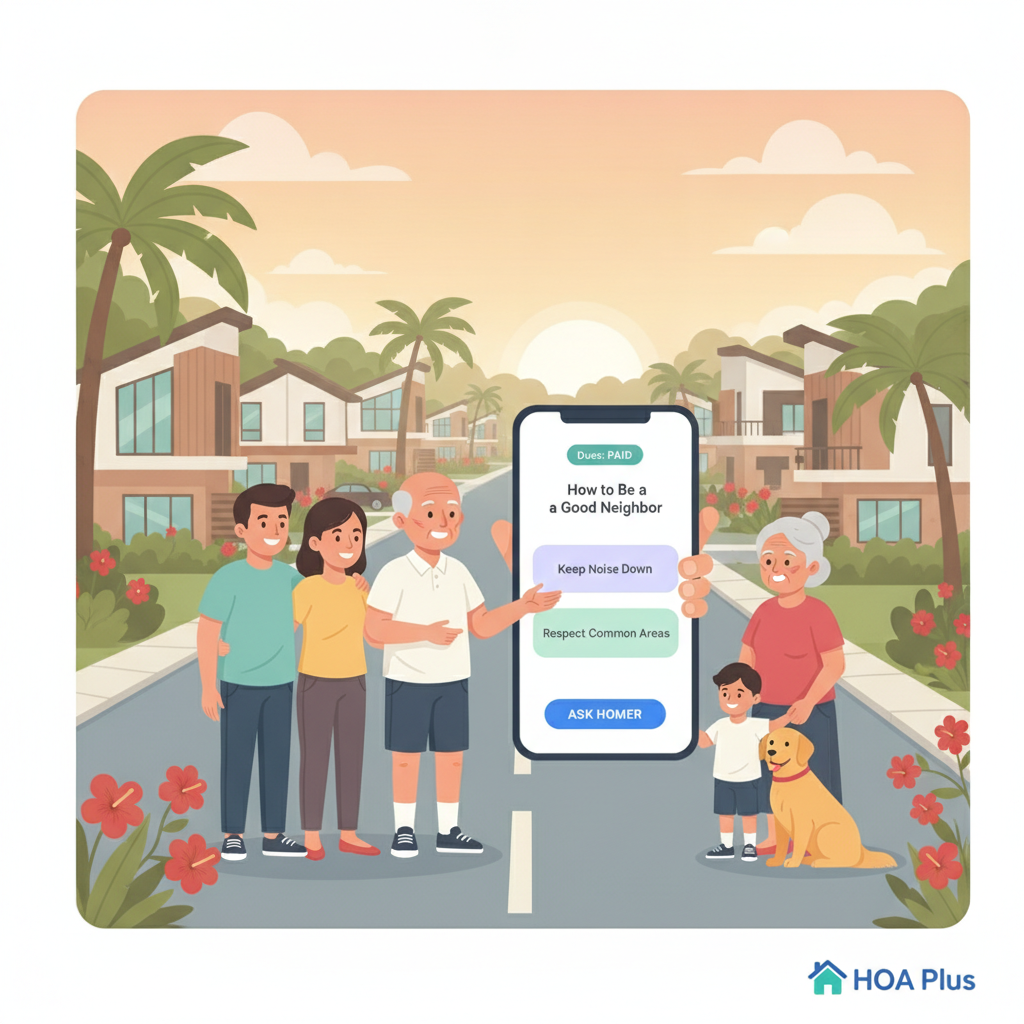
When you are not sure about a rule, check before you react. Your community app can answer common questions in seconds. That way, you stay calm and correct instead of guessing in the heat of the moment.
Lend a Hand When You Can
Kindness shows up best in small, practical ways. Hold the gate for a senior carrying groceries. Similarly, share extra fruit from your tree or offer a ride during heavy rain.
Watch for neighbors who struggle alone. For example, an elderly lolo may need help lifting a water container. Offering help once builds a bond that lasts for years.
You do not need to solve every problem. In short, just show that you notice and care. That alone makes you a good neighbor.
Sometimes the kindest thing is simply listening. A neighbor who is stressed may just need a few minutes of your time. In the same way, a quick hello can brighten a long day.
Offer your skills, not just your things. If you can fix a faucet, share that talent with a neighbor in need. Similarly, share tools, recipes, or gardening tips that cost you nothing.
Be a Good Neighbor During Storms and Emergencies
Typhoon season tests every subdivision. A good neighbor checks on the elderly before the wind grows strong. Moreover, they share water, batteries, and news when the power goes out.
Keep a simple list of who lives alone on your street. Then reach out when a storm warning arrives. The Department of Human Settlements and Urban Development urges communities to plan together for disasters.
Small checks matter more than grand rescues. Consequently, a knock and a cup of rice calm fears during a blackout. Your calm presence is often the biggest help of all.
After the storm passes, check on the street again. Clear a blocked drain or help move a fallen branch. Small team efforts speed up the whole block’s recovery.
Small Acts That Strengthen Your Whole Subdivision
Every friendly habit ripples outward. One warm neighbor inspires another. Ultimately, these small acts build the community everyone wishes they had.
You can start today. Greet someone, park with care, or check on a neighbor. Then watch how fast your street changes. For more ideas on a calmer group chat, read our guide to subdivision group chat etiquette.
Being a good neighbor is not about being perfect. It is about showing up. And it starts with you.
You do not need a grand plan or a big budget. Start with one neighbor and one kind act. Then watch the habit spread across the whole village.
Try HOA Plus free for your community and make connecting with your neighbors simple.