
HOA Emergency Preparedness in the Philippines: Is Your Subdivision Ready?
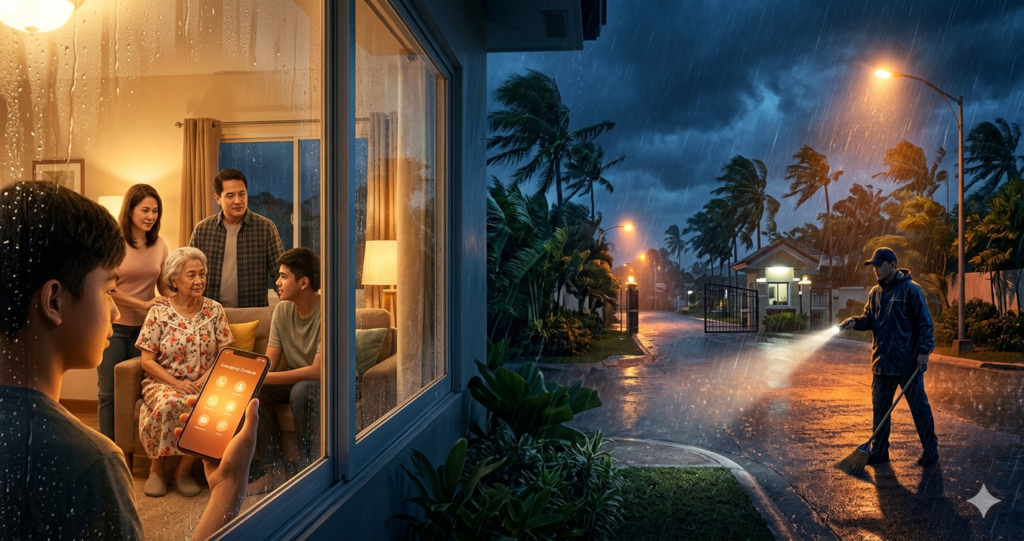
It’s 2 AM and the typhoon warning just got upgraded to Signal No. 3. Your phone is blowing up — the GC is flooded with panicked messages. “Who do I call?” “What’s the barangay hotline?” “Is the guard still at the gate?” Nobody has the answers, and the one board member who might know is unreachable. If your subdivision’s HOA emergency preparedness plan is just “post it in the GC and hope for the best,” your community isn’t ready.
Why HOA Emergency Preparedness Matters More Than You Think
The Philippines sits squarely in the typhoon belt. We deal with an average of 20 tropical cyclones a year, plus earthquakes, flooding, and the occasional fire. And yet, most subdivisions treat emergency preparedness as an afterthought — something the board talks about during the GA but never actually acts on.
Here’s the reality: when an emergency hits, the group chat becomes useless. Messages get buried in seconds. Residents are asking the same questions over and over. Critical information — like the nearest hospital, the barangay emergency hotline, or the HOA security office number — is scattered across old GC threads, printed on a faded bulletin board, or saved in someone’s phone who isn’t responding.
The problem isn’t that people don’t care about safety. It’s that there’s no single, reliable place to find emergency information when it matters most. A well-managed subdivision isn’t just one with clean streets and paid dues — it’s one where every resident knows exactly what to do and who to call when something goes wrong.
What Real HOA Emergency Preparedness Looks Like
Let’s be clear about what HOA emergency preparedness actually means for a Philippine subdivision. It’s not just about having a fire extinguisher in the clubhouse. It’s a system — a set of tools, contacts, and protocols that every resident can access instantly, without having to ask anyone.
At minimum, your subdivision should have three things in place. First, a centralized list of emergency contacts — not just the obvious ones like police and fire, but the specific numbers that matter to your community: your HOA security office, the nearest hospital, the barangay hall, the water district, and the electric company. Second, a way for residents to reach those contacts instantly — no scrolling, no searching, no guessing. Third, a system for the board to push emergency alerts to every homeowner at once, not through a group chat that half the residents have muted.
Most subdivisions have none of these. The emergency numbers are printed on a laminated sheet pinned to the guard house — helpful if you happen to be standing right there, useless if you’re at home at 2 AM during a typhoon.
How HOA Plus Puts Emergency Tools in Every Resident’s Pocket
HOA Plus includes an Emergency Central feature that puts all your community’s critical safety information right on your phone — organized, accessible, and ready when you need it.
Here’s what it does: the HOA admin sets up the community’s emergency contacts — police, fire, hospital, barangay, HOA security, utility companies, and any other numbers your subdivision needs. These contacts appear in a dedicated Emergency Central section inside the app. When a resident needs to make an emergency call, they open the app, tap the contact, and the call goes through immediately. No searching through the GC. No trying to remember which board member has the number. One tap, and you’re connected.
But Emergency Central isn’t just a phone book. It also supports active emergency alerts — so if there’s a flood warning, a fire in the area, a security breach at the gate, or any situation that requires immediate community-wide awareness, the board can send an alert that reaches homeowners through the app. This is fundamentally different from posting in the group chat, where your urgent message competes with memes, complaints, and “seen” reactions.
This kind of preparedness pairs naturally with other safety tools in the app. If your community already uses anonymous reporting for security concerns, Emergency Central adds the critical layer for when those concerns become urgent. And if your board is already sharing community vitals like security incident data, Emergency Central ensures that when incidents happen in real time, residents have the tools to respond — not just the data to review later.
What Happens When a Subdivision Isn’t Prepared
Think about the last time your area experienced a strong typhoon or an unexpected power outage. What happened in your subdivision? If your experience is anything like most communities, it probably went something like this: the GC exploded with messages. Residents asked who to call. Some people shared numbers, but they were outdated. The board president posted an update, but it got buried within minutes. By the time the situation was under control, half the community didn’t even know there had been an official response.
The consequences of poor HOA emergency preparedness go beyond inconvenience. When residents don’t know who to call, they hesitate — and in genuine emergencies, hesitation costs time. When the board can’t reach everyone quickly, misinformation fills the vacuum. And when the crisis passes, the community is left with a lingering sense that nobody was really in charge.
Contrast that with a subdivision where every homeowner has emergency contacts one tap away and the board can push alerts directly to every phone. The response is faster, calmer, and more coordinated. Residents feel safer — not because emergencies don’t happen, but because they know their community is prepared to handle them.
Building Your Subdivision’s Emergency Preparedness Plan
Start with Your Contact List
The foundation of any HOA emergency preparedness plan is a complete, accurate, and accessible list of emergency contacts. This isn’t just the national emergency hotline — it’s the numbers that are specific to your subdivision’s location and needs. Your list should include the local police station (not just 911), the nearest fire station, the nearest hospital or medical center, your barangay hall and barangay captain’s number, your HOA security office or head guard, the local water district, the electric utility company, and any other service providers your community relies on.
The key word is “accessible.” A list that lives in the treasurer’s laptop or the security logbook doesn’t count. Every resident should be able to pull up these contacts on their own phone, anytime, without asking anyone for help.
Set Up Emergency Alerts
Your board needs a way to reach every resident quickly — not through the GC, not through email, not through a bulletin board that nobody checks at night. When you use a proper community management app, the board can send emergency alerts through the app that residents see immediately. This is how you cut through the noise and make sure critical information actually reaches people.
For non-emergency but important announcements, the community hub serves as the central bulletin board. But for true emergencies, direct alerts through Emergency Central are the way to go.
Communicate the Plan
Having emergency tools is only useful if residents know they exist. Announce your emergency preparedness setup during the GA, post about it in the community feed, and remind residents periodically — especially before typhoon season. The goal is simple: when an emergency happens, every homeowner should already know exactly where to find the information they need.
How Emergency Preparedness Helps Residents
For everyday homeowners — especially seniors, solo parents, and families with young children — having emergency tools on your phone changes your sense of security entirely. You don’t need to rely on someone else to give you the right number. You don’t need to scroll through hundreds of GC messages to find the board’s update. You don’t need to wonder if the guard is still on duty or if the barangay has been notified.
Everything is right there: organized, up to date, and one tap away. That’s peace of mind that no amount of GC messaging can provide. And for residents who aren’t active in the group chat — whether by choice or because they’ve muted it — Emergency Central ensures they still have access to critical contacts and alerts right in the app.
How Emergency Preparedness Helps the HOA Board
For board members, emergency situations are some of the most stressful moments of their volunteer role. When something goes wrong, residents look to the board for answers — and if the board can’t respond quickly and clearly, the criticism comes fast.
Emergency Central changes that dynamic. Instead of scrambling to post updates in the GC and hoping people see them, the board can send a single alert through the app that reaches everyone. Instead of fielding dozens of messages asking for the same phone numbers, residents can find them on their own. The board’s role shifts from “information switchboard” to “community leader” — which is what it should have been all along.
This is the same principle behind every transparency tool in the app: when information is proactively available, the board spends less time answering questions and more time actually managing the community. Whether it’s dues transparency, project tracking, or emergency contacts, the pattern is the same — put the information where residents can find it, and the board gets its time back.
Don’t Wait for the Next Typhoon
Every year, Filipino homeowners are reminded — usually the hard way — that preparation matters more than reaction. Your subdivision doesn’t need to wait for the next Signal No. 5, the next earthquake drill, or the next security incident to get serious about HOA emergency preparedness. The tools exist. The setup takes minutes. And the difference between a prepared community and an unprepared one is felt most in the moments when it matters most.
Start with the basics: get your emergency contacts centralized, set up a way to reach every resident instantly, and make sure everyone knows where to find help when they need it. Your community deserves to feel safe — not just on sunny days, but especially during the storms.
Ready to make your subdivision storm-proof? Visit hoa-plus.app and see how Emergency Central, community alerts, anonymous reporting, and a full community hub can give your HOA the safety infrastructure it needs — so every resident knows exactly what to do when it matters most.
For more on how your HOA board can lead effectively during both calm and crisis, read our guide on HOA board member duties in the Philippines.