
HOA Insurance in the Philippines: A Simple Guide
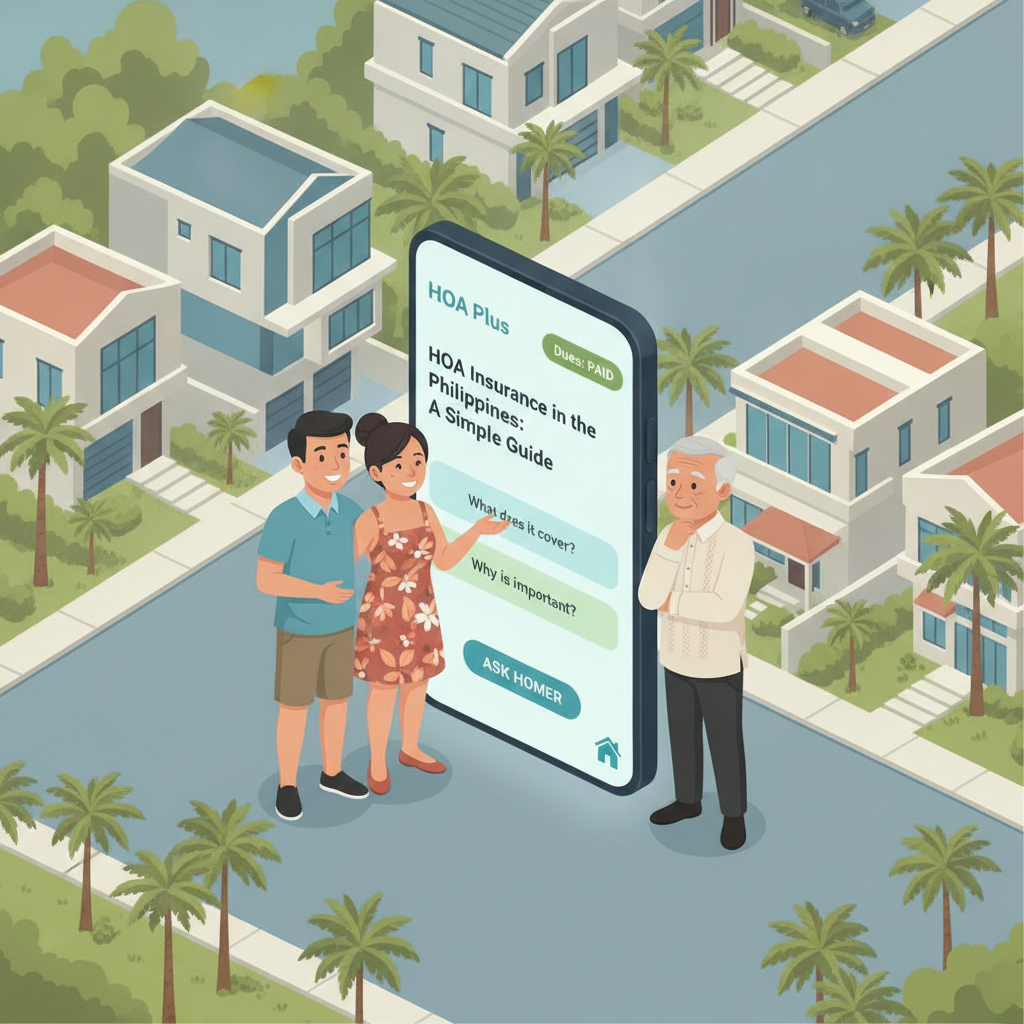
HOA Insurance in the Philippines: A Simple Guide for Boards and Homeowners
HOA insurance is the safety net your subdivision needs when a fire, a storm, or an accident damages a shared space. Your clubhouse, gate, and street lights cost real money to repair. When they break, someone has to pay the bill.
Many boards in the Philippines treat HOA insurance as an afterthought. However, one bad incident can wipe out years of careful savings in a single week. This guide explains what HOA insurance covers, what it costs, and how to choose the right policy for your community.
What Is HOA Insurance?
HOA insurance is a policy your association buys to protect the property and spaces that everyone shares. It covers the clubhouse, the gate, the perimeter walls, the guardhouse, and the common area lighting. It also protects the board from certain legal claims.
This insurance is not the same as your own home insurance. Your personal policy covers the four walls of your house. HOA insurance covers the parts of the subdivision that belong to the whole community. Therefore, both types of coverage matter, and they do different jobs.
Why HOA Insurance Matters for Philippine Subdivisions
Subdivisions in the Philippines face real risks every single year. Typhoons knock down trees and flood clubhouses. Fires can start in a shared kitchen or an electrical room. A guest can slip on a wet walkway and file a claim against the HOA.
Without HOA insurance, the board must pay for these losses out of member dues. Consequently, one bad storm can force a special assessment that every household must shoulder. Insurance spreads that risk so no single owner carries the whole burden.
Furthermore, many banks and developers expect associations to carry insurance. It signals that your community runs well and stays ready for the unexpected. For example, a lender may ask about your policy before approving a loan for a shared facility.
What HOA Insurance Should Cover
A solid HOA insurance policy protects three main things. First, property coverage pays to repair or rebuild common structures after a covered event. This includes your clubhouse, gate, fence, and any equipment your community owns.
Second, liability coverage protects the board when a visitor trips or falls in a common area. In addition, it can pay the legal fees if your HOA faces a lawsuit. Third, crime coverage protects your funds if money goes missing through theft or fraud.
Some policies also add coverage for equipment like pumps, generators, and CCTV systems. Specifically, ask your insurer about flooding, because standard policies in the Philippines often exclude it. Read the fine print before you sign.
How Much Does HOA Insurance Cost?
The price of HOA insurance depends on your subdivision’s size, location, and the value of your shared assets. A small community with a modest clubhouse pays far less than a large one with a pool and a gym. Similarly, areas that flood often carry higher premiums.
Most associations fold the premium into the annual budget as a regular line item. Ultimately, the cost is small when you divide it across all the homeowners in the community. Meanwhile, the peace of mind it buys is worth far more.
To get the best price, compare quotes from at least three licensed insurers. You can check an insurer’s license with the Insurance Commission of the Philippines. Never buy from a company you cannot verify.
Ask about the deductible too. This is the small amount your association pays out of pocket before the insurer steps in. A higher deductible lowers your premium, but it also means more cash on hand when a claim happens.
Who Buys the HOA Insurance Policy?
The board buys the policy in the name of the HOA. The cost comes out of the monthly dues that every homeowner already pays. In other words, each home chips in a small amount so the whole community stays safe.
Every homeowner then gets the benefit of that one policy. You do not need to buy your own coverage for the clubhouse or the gate. Instead, your own home policy covers your unit, while the HOA policy covers the shared parts.
How to Choose the Right HOA Insurance Policy
Start by listing every shared asset your community owns. Include the clubhouse, the gate, the fence, the street lights, and any equipment. This list becomes the basis for how much property coverage you truly need.
Next, review your bylaws and your reserve fund plan. A healthy reserve fund covers small repairs, while insurance handles the big disasters. You can read our guide on building a strong HOA reserve fund to see how the two work together.
Finally, ask a licensed broker to explain the exclusions in plain language. In short, know what the policy will not pay for before you need it. That way, there are no surprises after a storm.
Insurance vs. Your Reserve Fund
Some boards confuse HOA insurance with the reserve fund. They are not the same thing. The reserve fund is your own savings for planned repairs, like repainting the gate or fixing a cracked path.
Insurance steps in for the big, sudden losses. It covers the fire, the storm, or the accident that your savings alone cannot handle. A smart community keeps both a healthy reserve fund and a strong insurance policy.
Common HOA Insurance Mistakes to Avoid
One common mistake is under-insuring the clubhouse. If your building is worth five million pesos but you only insure it for two million, you will still owe the difference after a fire. Therefore, update your coverage as your property values grow.
Another mistake is skipping flood coverage to save a few pesos. Floods cause some of the worst damage in the Philippines. Nevertheless, many boards learn this lesson only after the water has already risen.
Finally, some boards forget to name the association correctly on the policy. The policy must list the homeowners association as the owner, not a single officer. Otherwise, a claim can stall when the officers change after an election.
How HOA Plus Helps You Protect Your Community
Good insurance starts with good records. HOA Plus keeps your documents, budgets, and maintenance plans in one secure place. When an insurer asks for your asset list or your financial history, you can find it in seconds instead of days.
The platform also tracks maintenance requests, so your team fixes small problems before they become big claims. For example, a small roof leak costs little to fix if you catch it early, but it can ruin a clubhouse if you ignore it. See how preventive maintenance planning protects your community’s assets.
When your records stay organized, you can buy the right coverage with confidence. And when a disaster strikes, you can file your claim quickly with every document in hand.
Get the Protection Your Community Deserves
HOA insurance is not a luxury. It is a basic duty that every responsible board should handle. One serious accident or one strong typhoon can put your entire community’s savings at risk.
Take time this month to review your policy, compare quotes, and close any gaps in your coverage. Your homeowners will rest easier when they know the community has this protection. So will you.