
HOA Maintenance Planning Philippines
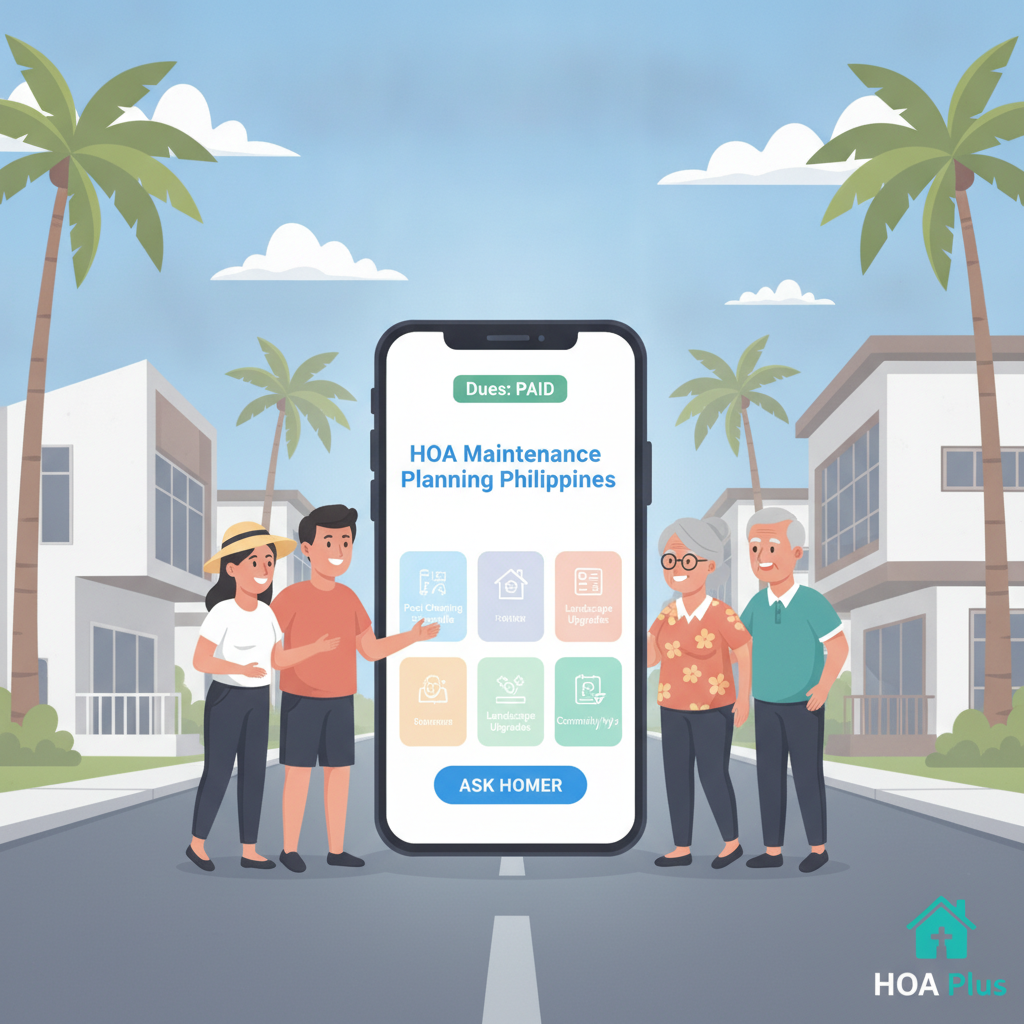
HOA Maintenance Planning: Keep Your Subdivision Beautiful All Year Long
Your subdivision looked perfect when it was first turned over by the developer. Freshly painted gates, smooth roads, and landscaping that made you proud to come home. Fast forward three years. The gate paint is peeling. The clubhouse ceiling has water stains. Three streetlights on Block 3 have been dead for two months. What happened? No one planned for maintenance. That is exactly why HOA maintenance planning matters.
What Is HOA Maintenance Planning?
HOA maintenance planning means looking ahead instead of waiting for things to break. Without a plan, your board stays stuck in repair mode. You wait for something to fail. Then you scramble to find a contractor. Then you rush to approve emergency expenses. This approach drains your budget and frustrates everyone.
In the Philippines, typhoons, extreme heat, and humidity put constant stress on buildings and infrastructure. Roofs leak after heavy rain. Drainage systems clog with debris. Perimeter walls crack under the sun. These are not surprises. They are predictable. And because they are predictable, your HOA maintenance planning can address them before they become expensive emergencies.
Furthermore, a well-maintained subdivision protects property values. Consequently, proper HOA maintenance planning should be a top priority for every board. In addition, it keeps residents happy and reduces the number of complaints the board receives each month.
The True Cost of Skipping HOA Maintenance Planning
When boards neglect maintenance, everything becomes more expensive. A small roof leak costs a few thousand pesos to patch today. That same leak becomes a ceiling replacement costing tens of thousands six months later. A drainage grate that just needs cleaning now turns into a flooded street after the next typhoon.
However, the financial cost is only part of the problem. Homeowners lose trust in a board that only shows up when something breaks. Residents begin to wonder where their dues go. Specifically, they ask: “If the clubhouse looks like this, what are we paying for?” Ultimately, poor HOA maintenance planning leads to frustrated homeowners and a burned-out board.
Similarly, emergency repairs always cost more than scheduled maintenance. Contractors charge premium rates for urgent work. Therefore, every peso spent on preventive care saves three to five pesos in emergency costs later. This is why HOA maintenance planning pays for itself many times over.
Building Your HOA Maintenance Planning Calendar
Good HOA maintenance planning follows the rhythm of the Philippine seasons. The climate gives you a natural structure for your annual calendar.
- January to March (Dry Season): Inspect roofs and repaint gates. Service air conditioning units in the clubhouse. Clean all drainage systems before the first rains arrive. This is also the best time to repair perimeter walls.
- April to May (Pre-Rainy Season): Trim trees near power lines. Check streetlight wiring. Inspect septic tanks. Test all sump pumps and backup generators. Make sure drainage canals are completely free of debris.
- June to October (Rainy Season): Monitor for leaks after every storm. Clear blocked drains right away. Address water damage quickly before it spreads. Nevertheless, you can still schedule indoor maintenance during this time.
- November to December (Cool Dry Season): Complete any deferred repairs. Conduct a full-year audit of maintenance spending. Finally, draft next year’s HOA maintenance planning budget for board approval.
In addition, schedule a quarterly walk-through inspection. Use a simple checklist: gates, fences, roads, streetlights, clubhouse, swimming pool, landscaping, and drainage. Furthermore, document everything with photos and notes. This creates a record that protects the board from accusations of neglect.
HOA Maintenance Planning and Your Budget
Maintenance should be a dedicated line item in your annual budget. It is not an afterthought funded by whatever is left over. A good rule for Philippine subdivisions: set aside 25 to 35 percent of your total dues collection for maintenance and repairs.
Meanwhile, build a separate reserve fund for major replacements. Roof replacement, road resurfacing, and swimming pool renovation will happen eventually. They are not annual expenses, but they are certain. Consequently, setting aside a small amount each year prevents big special assessments later.
For example, say your clubhouse roof needs replacement in five years. The estimated cost is 500,000 pesos. Set aside 100,000 pesos per year starting now. This approach keeps dues stable. Therefore, smart HOA maintenance planning is not just about scheduling repairs. It is about financial discipline that protects every homeowner.

Common Challenges in HOA Maintenance Planning
Every subdivision faces recurring maintenance headaches. Here is how proactive HOA maintenance planning handles the most common ones.
Vendor and Contractor Management
Finding reliable contractors frustrates many Philippine HOAs. The fix is simple: build a pre-vetted vendor list. When you find a good electrician or landscaper, keep their contact information. Rate them after every job. Over time, you build a trusted team ready for scheduled work.
Furthermore, always get three quotes for any job above a set amount. This keeps pricing fair and prevents favoritism. Specifically, document every quote and the board’s vote on which vendor to hire. This creates transparency that homeowners appreciate.
Unresponsive Homeowners
Some maintenance issues involve private property. A tree branch hangs over a neighbor’s roof. A leaking pipe sits within a homeowner’s lot. Send a polite written notice explaining the issue and the deadline. Nevertheless, if the homeowner does not act, the board needs a policy to step in and charge the cost back.
Typhoon Damage
The Philippines averages 20 typhoons per year. Some will hit your subdivision. Therefore, your HOA maintenance planning must include a typhoon response protocol. Decide who inspects after the storm. Know which contractors are on standby. Have a process for releasing emergency funds quickly. Ultimately, communities that plan for typhoons recover faster and spend less.
How HOA Plus Supports HOA Maintenance Planning
Managing maintenance with spreadsheets and GC messages leads to lost records. HOA Plus gives your board a central place to track every request and scheduled inspection. This makes HOA maintenance planning easier and more transparent.
Residents report issues directly through the app. A broken streetlight, a leaking faucet, or a damaged gate. The board sees every report in one dashboard. You assign it to a vendor and track it from open to resolved. Homeowners follow the progress in real time. This eliminates the “I reported this three times” frustration that poisons community trust.
In addition, the project tracking feature shows exactly where maintenance funds go. Each repair gets its own card with the cost, status, and completion date. This level of transparency turns skeptical homeowners into partners in HOA maintenance planning. For example, when residents can see that their dues funded the gate repainting, complaints about spending drop sharply.
Furthermore, HOMER answers questions about maintenance policies instantly. A homeowner wondering who pays for gutter repairs can ask HOMER and get the answer in seconds. No need to message the board president at 10 PM. This reduces the board’s workload while helping residents get answers faster.
Start Your HOA Maintenance Planning Today
You do not need a complicated system to begin. Start with a simple walk-through inspection this weekend. Write down everything that needs attention. Group items by urgency and season. Assign a board member to get quotes for the top three items. That is it. You have just started your first HOA maintenance planning cycle.
For a deeper dive into managing your HOA finances so you can fund your maintenance plan properly, read our guide on HOA Budgeting 101: Where Should Your Subdivision’s Dues Actually Go?. If you are ready to move your entire management system to a digital platform, see how the transition works in our post on HOA Digital Transition Philippines.
For official guidelines on subdivision maintenance standards in the Philippines, refer to the Department of the Interior and Local Government (DILG) for relevant local governance policies.
Ready to stop fighting maintenance fires and start planning ahead? Try HOA Plus free for your community at hoa-plus.app and give your board the tools to keep your subdivision beautiful all year long.