
HOA Annual Planning: A Simple Guide
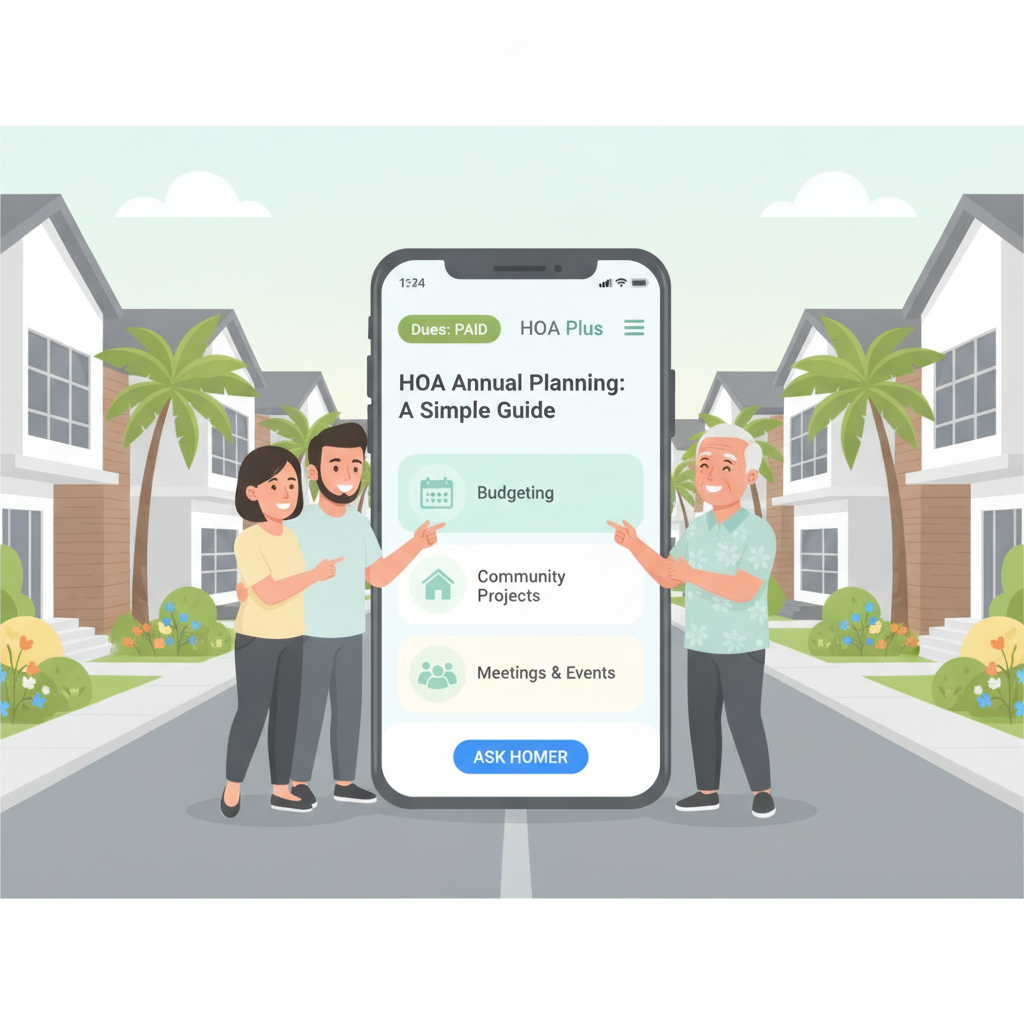
HOA Annual Planning: A Simple Guide for Philippine Subdivisions
HOA annual planning is the quiet work that keeps a subdivision running smoothly all year. When a board plans ahead, small problems stay small and every peso has a clear purpose.
Many boards only react. They wait for a complaint, a broken light, or an empty treasury, and then they scramble. Consequently, the same issues return year after year.
Good planning changes that. It turns a busy, stressed board into a calm, confident one. Therefore, this guide walks you through a simple HOA annual planning process your board can start today.
Why HOA Annual Planning Matters
An HOA that plans ahead spends less time putting out fires. In other words, preparation beats reaction every single time.
Without a plan, the board drifts from one emergency to the next. Money runs out, officers skip meetings, and residents lose trust. Nevertheless, a simple calendar of goals reverses all of that.
Planning also builds trust. When residents see a clear roadmap, they understand where their dues go and why. For example, a posted schedule of repairs and events shows that the board is doing its job.
Finally, a yearly plan protects the board from burnout. Officers share the workload across twelve months instead of cramming everything into one stressful week.
A plan also gives the board a shared answer to hard questions. When a resident asks why a project waits, you can point to the calendar and show exactly where it sits.
Set Clear Goals for the Year
Start your HOA annual planning by writing down three to five clear goals. Keep them simple and measurable so everyone knows what success looks like.
For instance, one goal might be to repaint the gate by June. Another might be to collect ninety percent of dues on time. Specifically, goals that you can measure are goals you can actually finish.
Share these goals with residents. When everyone sees the same targets, the whole community pulls in the same direction. In turn, this reduces arguments about what the board should do first.
Involve Residents in Your HOA Annual Planning
Planning works best when residents help shape it. Ask homeowners what matters to them before the board locks in its goals.
Run a short poll or open the floor at a meeting. For example, ask whether the priority should be the playground, the gate, or the drainage. When people help choose, they support the result.
You can also invite committee heads to own parts of the plan. One person tracks repairs while another runs the events. Meanwhile, the board stays free to make the big calls.
Build a Simple HOA Annual Planning Calendar
A calendar is the backbone of good HOA annual planning. Map the year month by month, and assign each task to a specific month.
- January to March. Review last year’s finances and finalize the new budget.
- April to June. Schedule major repairs and book the general assembly.
- July to September. Inspect common areas and plan the rainy-season upkeep.
- October to December. Collect year-end dues and plan the holiday events.
Put this calendar where residents can see it. A shared digital board works far better than a paper notice that fades in the sun.
Review the calendar at every monthly meeting. Tick off what you finished and slide forward what slipped. This small habit keeps the year from drifting off course.
Prepare the Budget Early
Money is the fuel of every HOA annual planning effort. Consequently, the budget should come first, not last.
Gather last year’s income and expenses, then project the year ahead. Include a reserve fund for surprises such as a broken pump or a big storm. Furthermore, review past-due accounts so you know how much you can truly collect.
You can read our guide to HOA budgeting for a step-by-step walkthrough.
Once the board approves the budget, publish a short summary. Transparency here stops the “where does our money go?” question before it starts.
Ask your treasurer to share a simple summary of income and spending each quarter. When the numbers stay visible, residents trust the plan and pay on time.
Plan Your General Assembly in Advance
The general assembly is the biggest event on the HOA annual planning calendar. Therefore, lock in the date months ahead, not weeks.
Send the notice early, prepare the agenda, and share the financial report. When residents know what to expect, the meeting runs faster and friendlier.
Your assembly must follow RA 9904, the Magna Carta for Homeowners Associations. This law sets the rules for notices, quorum, and voting.
Read our guide to the HOA general meeting for the full checklist.
Ask residents to submit agenda items ahead of time. Then the meeting covers real concerns instead of surprises raised at the last minute.
Schedule Maintenance and Reserve Fund Reviews
Repairs are easier when you schedule them before they become emergencies. Therefore, your HOA annual planning should include a maintenance calendar.
Walk the property at least twice a year. Check the gate, the lights, the drainage, and the common areas. Then list every fix, price it, and slot it into a month.
Set aside money in a reserve fund for the big-ticket items. For example, a new roof or a repainted clubhouse should never surprise the treasury. You can read our guide to the HOA reserve fund for more.
Keep a simple list of every asset, from the gate motor to the water tank. Note its age and condition. Then you know what to fix this year and what can wait.
Review Your HOA Annual Planning Every Quarter
A plan is only useful if the board actually checks it. Therefore, review your HOA annual planning every three months.
At each review, ask three questions. What did we finish? What slipped? What should we adjust? In short, small course corrections keep the whole year on track.
Invite a resident or two to these reviews. When homeowners see the board measuring progress, their confidence grows. Similarly, they become more willing to volunteer and pay on time.
Write the answers down after each review. A short record shows progress over time and helps the next board start strong.
Make HOA Annual Planning Easier with HOA Plus
HOA Plus turns your HOA annual planning into a shared, living document. The board can post the calendar, the goals, and the budget in one place.
Residents open the app and see the plan instantly. They can check the meeting date, review the budget, and ask HOMER any question. Consequently, nobody has to scroll through a noisy group chat to find a date.
The board also saves hours. Instead of chasing people for answers, you point everyone to the app. Meanwhile, announcements and reminders go out on their own, so no one misses a deadline.
Best of all, the plan stays transparent. Every resident sees the same numbers and the same timeline. Ultimately, that shared clarity keeps a community calm and united.
Start Your HOA Annual Planning This Week
HOA annual planning is not complicated. It simply asks the board to look ahead and write a few goals down.
Begin with one meeting this week. List three goals, set the assembly date, and share the calendar. The rest of the year will fall into place far more easily.
Even a rough plan beats no plan at all. You can always refine it next month. What matters is that the board stops reacting and starts leading.
Try HOA Plus free for your community and make your HOA annual planning simple and transparent.