
HOA New Homeowner Orientation: A Simple Guide
HOA New Homeowner Orientation: A Complete Guide for Philippine Subdivisions
An HOA new homeowner orientation is the fastest way to turn a stranger into a neighbor. When new residents learn the rules and meet the board, the whole village feels friendlier.
Many subdivisions skip this step. New families move in, and for weeks they guess about gate rules, garbage schedules, and where to pay. Consequently, small confusions grow into real conflicts.
Without a clear welcome, new homeowners learn the rules the hard way. They park in the wrong slot, leave trash out on the wrong day, or bring a pet past the gate without asking. Then a neighbor complains, and the board spends an evening sorting out a problem that a short meeting could have prevented.
This guide walks you through a proper HOA new homeowner orientation. You will learn what to cover, when to schedule it, and how to welcome new residents warmly.
Why an HOA New Homeowner Orientation Matters
A new homeowner who understands the rules rarely breaks them by accident. In other words, an informed neighbor is a cooperative neighbor.
The orientation sets the tone for the whole relationship. When the board greets a family warmly, that family starts with goodwill instead of suspicion. Therefore, small investments of time now prevent big disputes later.
New residents also need practical answers fast. For example, they need to know where to park, how to pay dues, and who to call for repairs. A short meeting answers all of these at once.
Finally, the orientation protects the board too. When everyone hears the same rules at the same time, no one can claim they never knew. This fairness keeps enforcement calm and consistent.
The welcome matters even more for seniors and renters. Older residents may struggle with a long list of rules, while renters may never hear about them at all. A patient orientation reaches both, so every home follows the same standards.
What to Cover in Your HOA New Homeowner Orientation
A strong orientation covers the basics first. Start with the rules that affect daily life, then add the details that keep the community running.
- Dues and payment. Explain how much to pay, when to pay, and what happens if a payment is late.
- House rules. Cover parking, pets, noise, and garbage pickup so no one is surprised.
- Gate and visitor rules. Show how to register visitors and get a car sticker.
- Common areas. Point out the clubhouse, pool, and playground, plus the rules for booking them.
- Board contacts. Give the names and roles of the officers, plus how to reach them.
Keep the session short and friendly. Nobody remembers fifty rules in one sitting. Moreover, a printed welcome kit lets residents review the details at their own pace.
Many of these rules trace back to your association’s bylaws, which must follow RA 9904, the Magna Carta for Homeowners Associations.
You can learn more about enforcing rules fairly in our guide to HOA rules in the Philippines.
Make the Welcome Personal, Not Just Procedural
Rules keep a community running, but warmth keeps it together. A new family that feels greeted will support the association far more than one that only hears a list of restrictions.
Introduce the new residents to their direct neighbors. Better yet, assign a welcoming neighbor who can answer small questions in the first weeks. This simple gesture stops loneliness before it starts.
Invite the family to the next community event as well. When people meet face to face, they begin to care about the place they share. In turn, caring neighbors pay dues on time and look out for each other.
When to Hold Your HOA New Homeowner Orientation
Timing matters as much as the content. The best moment is within the first two weeks after a family moves in.
Host a monthly session for everyone who arrived that month. Meanwhile, offer a one-on-one welcome for families who cannot attend. This way, no new resident slips through the cracks.
A quick orientation also works during the turnover of documents. For example, when the developer hands over a new phase, welcome the new owners together. Furthermore, pair the orientation with a short tour of the gate and common areas.
Follow up a week later with a quick message. Ask if anything was unclear and share the next meeting date. This small check-in shows the board truly cares, and it catches questions before they turn into complaints.
You can read our guide to what an HOA is in the Philippines to give new owners a clear picture of how their association works.
A Simple HOA New Homeowner Orientation Checklist
Use a short checklist so every session covers the same ground. Consistency is what makes the process fair.
- Welcome packet with the bylaws and house rules
- Dues schedule and payment methods
- Car sticker and gate registration form
- Emergency contact list and barangay numbers
- Tour of common areas and trash drop-off points
Hand the checklist to every new resident. In addition, keep a digital copy in the document vault so nothing goes missing.
Read our guide to HOA document management to store your welcome materials safely.
Common Mistakes That Undermine Your HOA New Homeowner Orientation
Many boards mean well but stumble on a few common errors. Here are the big ones to avoid.
First, do not overload new residents with too much at once. Spread the information across a few short sessions instead of one long lecture.
Second, do not skip the payment instructions. A resident who does not know how to pay will fall behind, and chasing late dues hurts everyone. For more on this, read our guide to HOA dues transparency.
Third, do not forget the personal touch. Rules matter, but so does a warm welcome. Ultimately, people support a community that treats them well.
Another mistake is keeping the orientation one-sided. Let new residents ask questions and raise concerns. A back-and-forth conversation builds far more trust than a long lecture.
Similarly, avoid waiting months before the first welcome. The longer a family lives without guidance, the more bad habits they form. A quick session in week one beats a thorough one in month three.
How HOA Plus Supports Your HOA New Homeowner Orientation
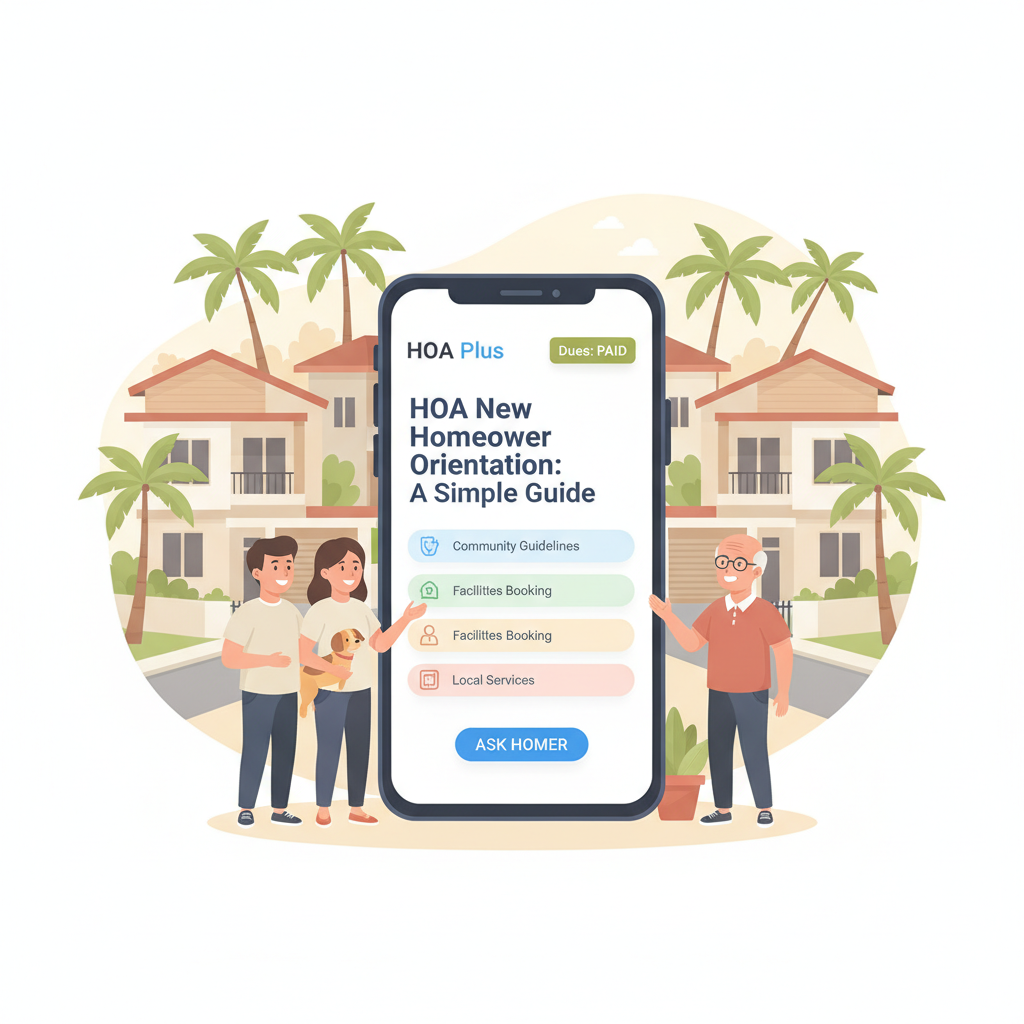
HOA Plus turns your HOA new homeowner orientation into an always-on welcome. New residents can find every rule, contact, and document inside the app.
When a new family has a question, they can ask HOMER instead of guessing. For example, they can type, “What time is garbage pickup?” and get the answer in seconds.
The app also keeps the welcome kit alive. The board can post a digital handbook, a dues schedule, and a list of contacts that new residents can open anytime. Consequently, no one has to dig through papers or scroll a busy group chat.
Best of all, the board saves time. Instead of repeating the same answers, you point new neighbors to the app and let it do the work.
Turn New Neighbors into True Neighbors
An HOA new homeowner orientation is more than a formality. It is the first real welcome a family receives in your community.
Start small. Gather a simple welcome kit, schedule a short meeting, and greet each new family with warmth. The good habits you build now will pay off for years.
Try HOA Plus free for your community and give every new neighbor a warm, clear welcome.